







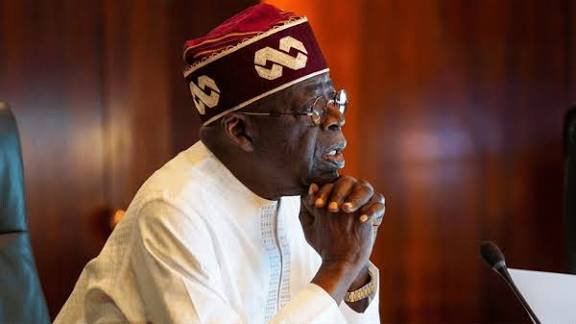


When President Bola Ahmed Tinubu assumed office in May 2023, he inherited an economy standing on fragile pillars of ballooning subsidy payments, a distorted foreign exchange regime, dwindling investor confidence, rising debt service burdens, and a public finance system stretched beyond its limits. Two years later, while debate rages loudly in political spaces, the evidence of structural correction is increasingly difficult to ignore.
Reform was never going to be comfortable. But it was unavoidable.

The most defining decision of this administration came within hours of inauguration: the removal of fuel subsidy. For decades, subsidy payments consumed trillions of naira annually; funds borrowed at high cost while infrastructure decayed and social services struggled. The system was opaque, prone to abuse, and fiscally unsustainable. Ending it was politically risky but economically necessary.
The immediate aftermath was painful. Fuel prices rose. Transportation costs increased. Inflationary pressures intensified. Yet, what critics often omit is the fiscal space created by that decision. Federal revenues improved significantly, and allocations to states increased. Subnational governments now have more resources to execute projects, pay salaries, and invest locally. That is not theory because it is reflected in FAAC distributions over the past two years.
Closely tied to subsidy reform was the unification of the foreign exchange system. For years, Nigeria operated multiple exchange rates that encouraged arbitrage, discouraged foreign investment, and bred uncertainty. Investors prefer clarity to confusion. By allowing the naira to reflect market realities, the administration chose transparency over artificial stability.
The exchange rate adjustment initially triggered price shocks; an inevitable consequence of years of suppressed market forces. However, foreign reserves have strengthened, FX backlogs have reduced, and confidence in Nigeria’s monetary direction has improved. International observers and rating agencies have responded positively to policy consistency, something previously lacking.
Critics ask: “But are ordinary Nigerians feeling it?” The honest answer is that reforms of this scale take time to translate into household relief. Structural correction precedes broad-based prosperity. What matters is whether the foundation is stronger today than it was two years ago. On fiscal discipline and macroeconomic direction, the answer is yes.
Beyond macroeconomics, infrastructure activity has accelerated. The Lagos-Calabar Coastal Highway project signals ambition in connectivity. Rail modernization continues. Road rehabilitation projects span multiple geopolitical zones. Port reforms aim to reduce bottlenecks that inflate the cost of imports and exports. Infrastructure investment is not cosmetic; it lowers the cost of doing business and stimulates productivity. Airports across the country have undergone solid transformation and are operating efficiently, digitally too.
On the social front, the introduction of the student loan scheme marks a significant policy shift. Access to higher education financing had long been a barrier for millions of young Nigerians. Now, parents heave a sigh of relief that finances for tertiary education of their children are off their parental burdens. The renewed focus on technical and digital skills, particularly through the 3 Million Technical Talent (3MTT) programme, positions Nigeria’s youth for participation in the global digital economy rather than dependence on shrinking traditional sectors.
The new national minimum wage of ₦70,000 also reflects recognition that reforms must be balanced with social cushioning. While wage increases alone do not solve inflation, they demonstrate responsiveness to labour realities in a transitioning economy. And the new tax reforms made possible by President Tinubu? Nigerian workers have heartwarming stories to tell that their take-homes now reflect a drop in their tax. Burdens of overtaxation and multiple taxation have been taken off the neck of Nigerians. Under the new tax regime, the poor pay no tax while the rich pay necessary taxes that don’t cut their throat.
Agriculture and food security remain pressing challenges, yet deliberate steps are being taken. Support for farmers, fertilizer reforms, and mechanization efforts are aimed at reducing food import dependence. Food inflation remains high, but long-term stability depends on production, not price controls. Structural agricultural investment is a more sustainable path.
Security, though still a work in progress, has seen intensified operations against banditry and oil theft. Increased oil production levels in recent months suggest progress in curbing pipeline vandalism; a critical development for revenue generation.
None of this suggests perfection. Nigerians are still grappling with high living costs. Small businesses continue to adjust to new realities. Public patience is understandably thin. However, governance must be evaluated not only by immediate comfort but by long-term correction.
The alternative to reform would have been continued subsidy borrowing, deepening fiscal crisis, worsening currency distortions, and eventual economic collapse.
Leadership sometimes demands choosing discipline over applause.
Two years is too short to declare total victory, but it is long enough to observe direction. On fiscal management, FX transparency, infrastructure drive, youth empowerment, and revenue stabilization, the direction has shifted from avoidance to confrontation of structural weaknesses.
History often judges reformers more kindly than contemporaries do. The true measure of these policies will not be in social media commentary but in sustained macroeconomic stability, rising productivity, and improved investor confidence over time.
Nigeria’s challenges were decades in the making. Expecting instant transformation ignores economic reality. What can reasonably be assessed is whether difficult but necessary steps are being taken. In that regard, President Tinubu’s first two years reflect a willingness to tackle entrenched distortions head-on.
The work is unfinished. The pain is real. But so too is the progress. Rebuilding a nation is not a sprint. It is a disciplined marathon. And two years in, the course correction is unmistakable.