






















Sometimes last year, a high-stake, no glitz, and ‘media-less’ joint security operation brought various towns and villages in Kwara and Oyo States under a screeching lockdown, the type that was only similar in size, scale and scope to the COVID’19 pandemic era restriction.
For two days, vehicular movement between Oko-olowo in Ilorin, down to Igbeti, Igboho, Kisi, and Saki in Oyo State for example, to Elesha Baruba, Okuta and Kaiama of Kwara State came to an abrupt but temporary halt.

In that case, the impeccable and commendable collaboration, coordination and cooperation between the security agencies and the community leaders, local security formations and other critical stakeholders ensured all hands were on deck as efforts to flush out criminals from their hideouts gathered unprecedented momentum.
Long before the joint operation became a huge success, travelers, traders, transporters and farmers endured tough times moving freely as the fear of abduction and attacks by the notorious criminals sent chill down their spines. The Old Oyo National Park became particularly and essentially dangerous for movement as bandits, who fled from the superior firepower of the Nigerian military up north, turned the forest into a safe haven for their nefarious activities.
Tales of kidnap for ransom became a daily occurrence as people weather the chilling storms of insecurity and uncertainty. To say people became cynical, hopeless and helpless would be an understatement. That moment, sobering and heartbreaking, forced people to actively engage with the system that has long become reactionary and recalcitrant to their very existence.
Quite frankly, the decision of the population of both states to pressure their governments to act with firm conviction effectively brought the hydra-headed monster of insecurity under to its knees, thereby restoring people’s sense of security and stability in the capacity of their leaders to deliver when it matters.
By destiny and design, both Kwara and Oyo States have long enjoyed a sort of familial relationship. For example, Kwara is Oyo closest neighbour to the North. That is in addition to their ancestral connection, particularly among the Yoruba speaking people. As the entrepot, Ilorin, the state capital also serves as the gateway for the northerners into the southwest, a connection that has lasted generations boasting both economic activities and cultural exchange.
In effect, the two states are not only closed neighbors but brothers in the entity called Nigeria. That is why any attempt aimed at trivializing the recurrent bloodshed perpetuated by the bandits in some parts of Kwara state as a mere communal clash or a minor conflict between the indigenes and settlers is like trying to avoid daylight: you can underestimate it, but cannot understate the wrath and magnitude of such an absurdity.
In a way, the metastasizing nature of the killings is, for all practical purposes, representative of and reflect the hallmark of a failed policing system and governance structure; one that has essentially suffered monumental setbacks in the face of renewed violence by gun wielding criminal elements across the country.
For many years, Kwara, the state of harmony, once prided itself as one of the most peaceful and stable states in Nigeria. That assertion was anchored on the strategic successes it recorded in sustaining years of harmonious relationship among its disparate population, and crucially, in tackling the scourge of insecurity in its backyard, particularly when pale with the chaos and crisis that have upended lives among its north central neighbors.
In Kogi, Kwara neighbor to the south, the incessant cases of kidnappings, robberies and killings simply gave the state away as a hotspot of insecurity. Take the alarm raised by the Okun Development Association (ODA), the umbrella socio-cultural union of the Yoruba-speaking people of Kogi over insecurity in the state on the 21st May, 2025. A statement credited to the ODA President-General, Akenson Rotimi noted the “grave concern over the deteriorating security”.
“Our people no longer feel safe returning home”, the statement declared “business owners are shutting down, and farmers are afraid to go to their farms. The impact on our socio-economic activities is devastating”. In Niger State, attacks on critical power assets and installations for example not only disrupted livelihood but also plunged the whole country into perpetual and perennial precipice of darkness. Pause and think of the Kagara school children abduction by the bandits in the state as well and you will get a sense of insecurity that have ravaged the state.
Of note is the Benue protracted endless cycle of violence and bloodshed, one that is quite revealing and self-evident. Imagine the mass killings that led to the nationwide oucry in Yelwata many months ago. That bloodshed alongside other senseless killings in the state have undeniably and literally defied all solutions. In Plateau, the situation is even more dire and disconcerting. The seemingly unresolved fight for mineral resources, religious acrimony, and other social unrests have equally turned the table of peace in the state to one of constant chaos.
As the scramble for mineral resources such as lithium fragment Nasarawa state, the lure of sudden economic prosperity has turned otherwise able-bodied men and women against the state – thereby overwhelming and overstretching the already overstrained security architecture. Put together, the challenges of insecurity rocking other north central states carefully placed Kwara State at a clear advantage head and above its neighbors. That also put it in a perilous and precarious situation as the relative calm enjoyed in the state continue to buckle under the yoke of criminals and bandits — many of whom are on the run from surrounding states. Whether in the rhetoric or reality, the uptick increase in the level of insecurity in Kwara has placed Oyo under a direct spotlight.
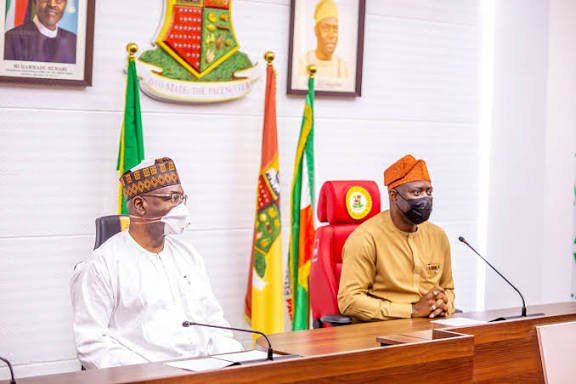
Aside the historical affinity that exists between Oyo and Kwara States, the governors of both states equally shared a sort of relationship that has never existed between leaders of both states in recent history. While Abdulrahman Abdulrasaq currently chairs the Nigeria Governors Forum, Seyi Makinde is his vice chairman. That by implication offers a window of opportunity for both states to work closely and genuinely in tackling the menace of banditry in both states.
The expansive nature of the relationship between the two leaders means also that the sharing of intelligence on insecurity in particular would further cement the relationship while securing the people of the two states. Of course, that effectively played a crucial role in the joint security operation that rooted out the bandits out of the Old Oyo National Park almost a year ago.
The Kwara security catastrophe should concern us to buckle up, prepare ahead and get set for the ultimate showdown with the criminals. While there is no doubt in Governor Seyi Makinde’s capacity to mobilize resources and proactively nip the problem in the bud, the era of deploying band-aids and cosmetic approaches to deeply rooted, complex and multifaceted problems ought to be over. For one thing, Oyo must not wait for the criminals to find their ways into the state before they are sent to hell.
As a matter of principle, a solidarity visit by Governor Makinde to Governor Abdulrasaq will send a strong signal to the bandits that Oyo will not allow the tragedy unfolding the Kwara to gain a foothold in and poison the waters of relative peace, stability and security in the state.
OYO101 is Muftau Gbadegesin’s opinion about issues affecting the Oyo state and is published every Saturday. He can be reached via @Upliftnuggets on X, muftaugbadegesin@gmail.com, and 09065176850.