
















It is often said that nations do not rise above the quality of their human capital. If that is true, and it is, then Nigeria must begin to ask itself some uncomfortable questions. Why, decades after independence and despite enormous resources, do we still grapple with mass illiteracy, a broken education system, and millions of out-of-school children?

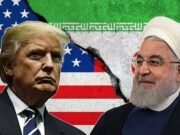
A useful, if unlikely, point of reference is Iran. Iran is not a perfect country. It faces economic sanctions, political tensions, and internal challenges. Yet, in the midst of these constraints, it has achieved something Nigeria continues to struggle with: a highly literate population, especially among its youth. While its overall literacy rate stands at about 89%, youth literacy is near universal, hovering around 98%. That single statistic tells a deeper story about priorities, discipline, and national direction; qualities that Nigeria must urgently rediscover. The war of aggressions and intimidations Trump of US took to Iran was what opened my eyes to a largely educationally successful country that Iran is.
Iran did not stumble into educational success. It pursued it deliberately. From the late 20th century, it treated literacy as a matter of national urgency, rolling out aggressive policies to ensure that every child had access to basic education. In Nigeria, however, education is too often reduced to campaign rhetoric; grand promises that dissolve into underfunding and neglect once elections are won. Budgets remain inadequate, teachers are poorly motivated, and infrastructure continues to decay. Until education is treated as a non-negotiable national priority rather than a political talking point, meaningful progress will remain elusive.
Perhaps Iran’s most strategic move was its focus on the younger generation. By ensuring near-universal literacy among its youth, it has effectively secured its future. Nigeria, by contrast, is home to one of the largest populations of out-of-school children in the world, a reality that poses not just an educational challenge, but a looming social and economic crisis. A nation that neglects its young people mortgages its future, and Nigeria is already paying the price.
Beyond formal schooling, Iran invested in mass literacy campaigns that reached rural communities and previously excluded populations. Education was taken to the people, rather than expecting the people to find their way to education. Nigeria must adopt a similar sense of urgency. Adult literacy programmes, community-based initiatives, and targeted interventions in underserved regions, particularly in the North, must be pursued with seriousness and scale. Illiteracy should not be treated as a mere statistic, but as a national emergency.
There is also a cultural dimension that cannot be ignored. In Iran, education is widely respected, and families actively encourage academic achievement. In Nigeria, that cultural foundation is gradually eroding. The increasing glorification of quick wealth, political patronage, and social shortcuts continues to undermine the value of learning. No education policy, however well designed, can succeed in a society that does not truly believe in education.
Equally important is the issue of inclusion. Iran has made notable progress in closing the gender gap in education, with young women achieving literacy rates comparable to their male counterparts. Nigeria still faces significant barriers to girl-child education in many regions, driven by poverty, cultural practices, and insecurity. Yet the evidence is clear: when a girl is educated, the benefits extend far beyond the individual to families, communities, and the nation at large.
One of the most enduring lessons from Iran’s experience is the power of consistency. Its educational reforms were not abandoned with changing administrations; they were sustained over time. Nigeria, on the other hand, suffers from chronic policy instability. Each new government is often more interested in launching fresh initiatives than in strengthening existing ones. Development cannot thrive on policy somersaults. It requires continuity, patience, and a long-term vision that transcends political cycles.
Moreover, Iran’s investment in literacy has translated into broader national development, particularly in science, engineering, and local innovation. Nigeria must rethink its approach to education, shifting from the mere production of certificate holders to the cultivation of thinkers, innovators, and problem-solvers capable of driving economic growth and national transformation.
The comparison between Nigeria and Iran is not about imitation, but about introspection. If a country facing sanctions and global isolation can build a highly literate population, Nigeria has little excuse for its continued struggles. The challenge is not a lack of resources or ideas, but a deficit of political will, policy discipline, and societal commitment.
Until these fundamental issues are addressed, the promise of development will remain just that; a promise. And time, as always, is not waiting.