

















One area I deem myself uneducated is global politics, diplomacy and security. Perhaps it’s because I have not developed enough interest to delve into global politics and understand why things are the way they have been regarding international politics, diplomacy and war.
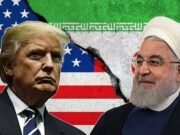
However, no matter how uninterested one appears to be, one cannot escape hearing reports, daily, of events around the world either through international television channels or digital social media. Which is why one is conversant, albeit unconcernedly, about America’s invasions of Afghanistan in 2001 and Iraq in 2003. It then calls for more than a passing interest in world affairs as America has beamed her war-lights on Iran 23 years after attacking Iraq, leaving the once prosperous country a shadow of her former self.

Imagine a neighbourhood boxer with bulging biceps strutting through the streets, chest puffed out, challenging every neighbour whose arms lack similar muscles. His confidence is loud, his presence intimidating, and his reputation precedes him. Many step aside, not necessarily because they believe he is right, but because they know the cost of resisting him. Yet beneath the spectacle lies a troubling question: What purpose is served when strength is used merely to provoke conflict rather than maintain peace?
For decades, the United States has often appeared to play the role of that neighbourhood boxer on the global stage. Possessing one of the most formidable military machines in human history, Washington has repeatedly intervened in the internal affairs of other sovereign nations, sometimes under the guise of democracy, sometimes in the name of security, and sometimes in pursuit of geopolitical influence.
However, strength without restraint rarely earns admiration. More often, it breeds suspicion, resentment, and long-term instability.
America maintains the same pattern of self-serving intervention globally. From the early years of the 21st century, America’s military reach has been felt across continents. The invasion of Afghanistan in 2001 and the subsequent war in Iraq in 2003 were justified as necessary steps to combat terrorism and eliminate threats to global security. Yet the aftermath tells a more complicated story.
Afghanistan endured two decades of war, ending ironically with the return of the same Taliban that the intervention sought to remove. Iraq, once a centralized state under Saddam Hussein, descended into years of sectarian conflict, insurgency, and political fragmentation. The promise of stability and democracy proved far more difficult to achieve than the initial military victories.
The lesson from these experiences is sobering; that it is easier to win a war than to win the peace that follows.
But America misses the lesson that the opponent is not always weak. The calculus changes even more dramatically when the target is not a weakened state but a nation with its own strategic depth and military capacity. The ongoing tensions involving Iran, particularly with its regional rival Israel and the strategic backing of the United States, illustrate this reality. Iran is not Afghanistan or Iraq. It is a country with a long civilizational history, significant military capability, and deep regional influence. Attempts to isolate or intimidate it have consistently produced resistance rather than submission.
What seemed easy against fractured states becomes far more complex against a nation capable of responding in similar measures, if not more. The global community watches these tensions with apprehension because the consequences of escalation would be catastrophic not only for the Middle East but for the world economy and international security.
America swims in the illusion of invincibility. Great powers throughout history have often fallen prey to the illusion of invincibility. Military superiority can create the belief that force is the most effective tool of diplomacy. Yet, history repeatedly shows that influence built on coercion is fragile. The Roman Empire learned it. The British Empire eventually faced it. And modern superpowers must confront the same truth; that dominance cannot permanently replace dialogue.
America’s strength is undeniable, but strength alone does not confer moral authority. In fact, the more powerful a nation becomes, the greater the responsibility it bears to exercise restraint.
Then, there is a better path forward. Rather than behaving like the boxer who constantly searches for opponents, the United States could better serve the global order by using its immense influence to mediate conflicts, strengthen international institutions, and encourage diplomacy. True leadership is not measured by how many fights one can win, but by how many wars one can prevent. If the past two decades have taught anything, it is that unsolicited military interventions rarely produce the stability they promise. They often leave behind shattered societies, deep resentment, and geopolitical complexities that last for generations.
The world does not need a neighbourhood bully, even a powerful one. What it needs is a responsible leader willing to match its strength with wisdom. Only then will the bulging biceps of power be guided by a disciplined and thoughtful mind.
Who will tell Trump in that famous Ebira phrase “Dede mi ra ho! (Leave the world ALONE!)? If Trump cannot help the world to escape pyrrhic peace, he should help the world to stop shedding blood.